

Last Updated on November 8, 2026
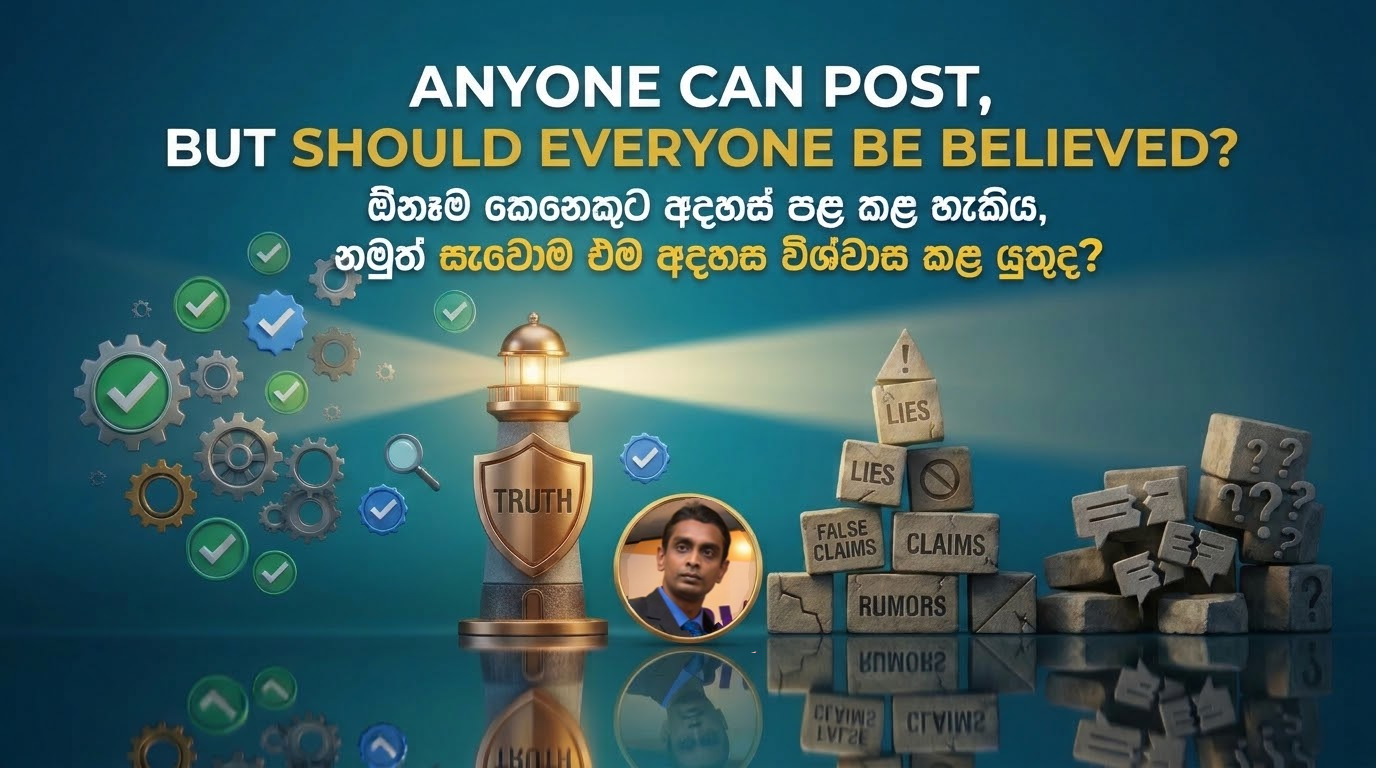
Anyone Can Post, But Should Everyone Be Believed?
One Lie is Small. A Pyramid of Them Looks Like the Truth.
Dinesh Abeywickrama Ph.D. (Reading), MBCS, MBA, BCS
Lie pyramidization
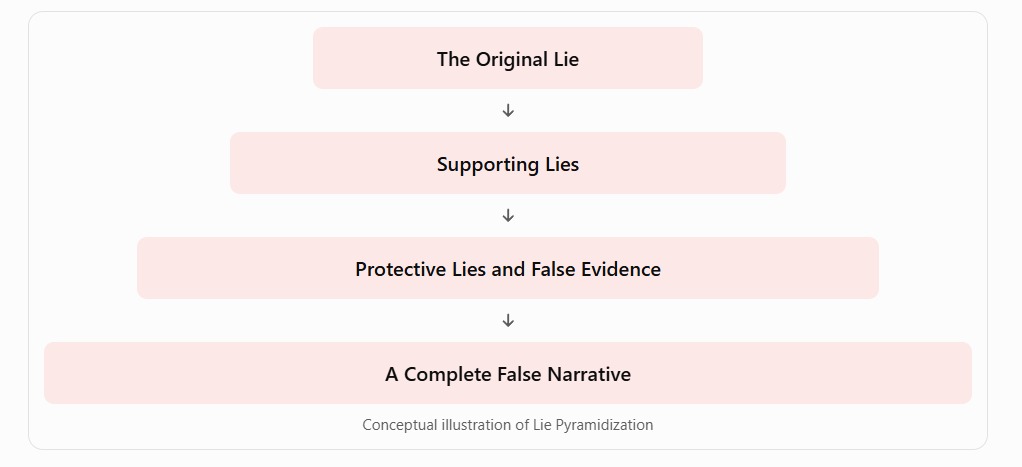
Lie pyramidization is when one lie leads to another. Each new lie covers up and supports the previous one, until the whole story starts to look like the truth, even though it is built entirely on lies.
On social media this can happen very easily. One false post gets shared, someone adds a “proof” to back it up, and another person repeats both. Soon a made-up story looks solid because so many pieces seem to support each other.
Social media gave ordinary people a voice. A student can explain a science topic to thousands of strangers. A small business owner can reach customers in another country. That freedom is a good thing, and nobody wants to lose it.
But the same freedom has a side effect. Anyone can write about health, money, law or politics without studying the subject, working in the field, or checking their facts. A confident post with a nice picture can travel faster than a careful article written by someone who spent ten years on the topic.
Most people have seen it happen. A “miracle cure” gets shared by thousands. A fake news story makes people angry before anyone checks if it is real. Often the person who shared it did not mean any harm. They just trusted it and passed it on. But when wrong information spreads at that speed, real people can end up making bad decisions about their health, their savings, or how they treat their neighbors.
So, the question is simple. What are the big platforms doing about it, and what is left for us to do?
What is E-E-A-T, and why does it matter here?
You may have heard the word E-E-A-T, especially if you work with websites or content. It is a framework from Google, and it stands for Experience, Expertise, Authoritativeness and Trustworthiness. It is used in Google’s Search Quality Rater Guidelines, which are the instructions given to real human reviewers who check how good and reliable search results are.
Here is what each part means in plain words:
- Experience: Has the writer actually done or lived what they are writing about? For example, someone who really used a product, or visited a place.
- Expertise: Does the writer have real knowledge of the subject?
- Authoritativeness: Do others see this person or website as a go-to source on the topic?
- Trustworthiness: Is the content honest, accurate and safe? Is it clear who is behind it?
Google added the first “E” for Experience in December 2022. Before that, the framework was called E-A-T. Google’s own guidelines say that trust is the most important part of the family. A page that is not trustworthy has low E-E-A-T however experienced or expert it may look. One example in the guidelines makes this very clear: a financial scam is untrustworthy even if the person behind it is a very experienced scammer.
This is the exact problem we see on social media. Many posts sound experienced and expert, but nobody checks if they are true.
One honest note: E-E-A-T is a Google Search idea. Facebook and other social platforms do not score every post using E-E-A-T. But it is a useful way to think, because the four questions are the same ones we should ask about any post before we believe it.
What the big platforms actually do
Each company handles the problem in its own way. None of them has a perfect answer.
YouTube: Remove, Reduce, Raise, Reward
YouTube describes its approach with four ideas, which it calls the “4 Rs”: remove content that breaks its policies, reduce recommendations of borderline content, raise up authoritative sources for news and information, and reward trusted creators.
For topics where accuracy matters a lot, such as news, politics, and medical and scientific information, YouTube says its machine learning systems priorities information from authoritative sources in search results and recommendations. It also shows information panels, which are boxes with context from outside sources. For some topics, these panels link to independent sources such as Wikipedia or health officials. YouTube also has policies against certain harmful medical misinformation, such as false claims about approved vaccines.
In 2020, YouTube brought fact-check panels to US search results, working with organizations including FactCheck.org and PolitiFact.
This system has limits, though. A study by Science Feedback looked at 940 YouTube videos that fact-checkers had marked as containing misinformation. Only 350 of them, about 37%, showed an information panel. The researchers also pointed out that the panels appear on topics in general, not based on whether a particular video is accurate.
Meta (Facebook and Instagram): from fact-checkers to Community Notes
Meta started a professional fact-checking program in 2016, mainly because of worries about elections and public health. At its peak it partnered with more than 100 independent organizations around the world.
That changed in 2025. Meta announced that it would end third-party fact-checking and switch to Community Notes, a system inspired by X. In the US, the old program officially ended on April 7, 2025, across Facebook, Instagram and Threads.
Meta’s reasons were that expert fact-checkers have their own biases and that too much content was being fact-checked. The company said the new model would be less prone to bias.
Here is how Community Notes work. Users apply to become contributors. They write notes that add context to posts that might be misleading, and other contributors rate those notes. A note only appears publicly when contributors with different viewpoints agree that it is helpful. A key difference from the old system is that these notes do not reduce the reach or visibility of the post they are attached to. In the beginning, notes were also visible only to users in the US.
People disagree strongly about this change. Supporters see it as a win for free expression and a fairer approach. Media watchdogs and misinformation researchers worry that removing expert review could let false claims spread more easily. Meta itself said the product was new and that it did not expect the process to be perfect. It is still too early to give a final verdict.
X (formerly Twitter)
X was the platform that made the Community Notes model popular. Like Meta’s version, it depends on ordinary users to add context to potentially misleading posts, rather than on a team of professional fact-checkers.
The real challenge
If you look at all of these approaches together, a pattern appears.
- Expert fact-checkers are careful but slow, expensive, and accused of bias by some people.
- Crowd-based notes can scale and may feel fairer, but they depend on honest, active contributors and can be slow on fast-moving posts.
- Automated systems and information panels can reach millions of people, but they can miss a lot, as the YouTube study shows.
No method solves the problem completely. Billions of posts are created every day, and no company can read and check all of them. That is why the habits of everyday users matter so much.
What you can do before you share
You do not need a degree to be a careful reader. A few simple questions are enough, and they follow the same ideas as E-E-A-T.
- Who wrote this? Is it a named person or organization? Do they know the subject, or have real experience with it?
- Where is the proof? Is there a source, a study, or a link you can open and read yourself?
- Do other trusted sources say the same? Search for the claim. If only one page says it, be careful.
- How does it make me feel? Posts designed to make you angry, scared or shocked are the ones most likely to be shared without checking.
- Is the topic serious? Health, money and safety advice should come from people qualified to give it. Wrong advice in these areas can cause real harm.
If you cannot answer these questions, wait before you share. One minute of checking can stop a false story from reaching a hundred more people.
A word for people who create content
If you write or make videos, you can help too. Show who you are. Share your real experience and say clearly what you do not know. Link to your sources. If you get something wrong, correct it openly. These habits build trust, and trust is what both readers and search engines are looking for.
Freedom of speech is worth protecting, and the answer to bad information is not to silence everyone. But freedom works best when it comes with responsibility. The platforms will keep changing their systems, and some of those changes will work better than others. Until then, the strongest protection against false information is a reader who stops, checks and thinks before pressing share.
Sinhala Version / සිංහල අනුවාදය
ඕනෑම කෙනෙකුට අදහස් පළ කළ හැකිය, නමුත් සැවොම එම අදහස විශ්වාස කළ යුතුද?
එක බොරුවක් කුඩා ලෙස පෙනුනද, බොරුවක් මත තවත් බොරුවක් එකතුව බිහිවන බොරු පිරමිඩයක් සත්යය මෙන් පෙනිය හැක.
බොරු පිරමිඩීකරණය (Lie pyramidization)
බොරු පිරමිඩීකරණය යනු එක බොරුවක් තවත් බොරුවකට මග පාදන අවස්ථාවයි. සෑම නව බොරුවක්ම කලින් බොරුව වසන් කරමින් එයට ආධාර කරයි. අවසානයේ මුළු කතාවම බොරු මත පමණක් ගොඩනැගී තිබුණත්, එය සත්යයක් සේ පෙනෙන්නට පටන් ගනී.
සමාජ මාධ්ය තුල මෙය ඉතා පහසුවෙන් සිදු විය හැක. එක ව්යාජ පළ කිරීමක් (පොස්ට්/වීඩියෝ) සමාජ මාධ්ය වෙත මුදාහල පසු, යමෙක් එය තහවුරු කිරීමට “සාක්ෂියක්” එක් කරයි. තවත් කෙනෙක් ඉහත පළකිරීම් දෙකම නැවත තමන්ගේ සමාජ මාධ්ය ගිණුමක පළ කරනු ලබයි. කලක් ගතවන විට වරින් වර එකතු වූ කොටස් සමූහයක්, එකිනෙකට සහාය දෙන බවක් පෙනෙන නිසා, මවාගත් මතයක් හෝ, මිනිසුන් අතර බලහත් කාරයෙන් සමාජගත කිරීමට උත්සාහ කරණ කතාවක්, සත්යක් සේ පෙනීමට පටන් ගනී.
සමාජ මාධ්ය සාමාන්ය මිනිසුන්ට හඬක් ලබා දුන්නේය. ශිෂ්යයෙකුට විද්යා මාතෘකාවක් දහස් ගණන් ආගන්තුකයන්ට පැහැදිලි කිරීමට අවස්තාව ඉන් සැලසී ඇත. කුඩා ව්යාපාරිකයෙකුට වෙනත් රටක සිටින ගනුදෙනුකරුවන් වෙත ළඟා විය හැක. එම නිදහස යහපත් දෙයක් වන අතර, එය අහිමි කර ගැනීමට කිසිවකු කැමති නොවනු ඇත.
එහෙත් එම නිදහසම විටක අවභාවිතා විය හැක. යම් විෂයක් නිසි ලෙස හදාරා නොමැතිව, එම ක්ෂේස්ත්රයේ මනා පලපුරුද්දකින් තොරව, කරුණු නිවැරදි දැයි පරීක්ෂා කිරීමකින් තොරව, උදාහරණයක් ලෙස ඕනෑම කෙනෙකුට සෞඛ්යය, මුදල්, නීතිය හෝ දේශපාලනය ගැන සිය අදහස් සමාජ මාධ්ය වෙත මුදාහල හැකිය. ලස්සන පින්තූරයක් සහිත ආත්මවිශ්වාසය පෙන්වන පළ කිරීමක්, අවුරුදු දහයක් එම මාතෘකාව වෙනුවෙන් ගත කළ කෙනෙකු ලියූ ප්රවේශම් සහගත ලිපියකට වඩා වේගයෙන් සමාජ මාධ්ය තුල සංසරණය විය හැක.
මෙවැනි ඇත්දැකීම් බොහෝදෙනෙකු මේ වන විටත් ලබා ඇතුවාට සැකයක් නැත. මෙවැනි අදහසක්/තොරතුරක් වටිනා පළකිරීමක් ලෙස බොහෝ දෙනා අතර සංසරණය වෙනු ඇත. ව්යාජ පුවතක්, එහි අඩංගු කරුණුවල සත්ය අසත්යතාවය කිසිවෙකු පරීක්ෂා කිරීමට පෙර මිනිසුන් කෝපයට වියවුලට පත් කළ හැක.
බොහේ විට එය තම හිතමිතුරන් සමග බෙදාගත් (Share) පුද්ගලයා තුල කිසිලෙසකින් හෝ සමාජයට හානියක් කිරීමේ අරමුණක් නොතිබුණා විය හැකිය. ඔවුන් එය විශ්වාස කර ඉදිරියට යැවූවා පමණි. එහෙත් වැරදි තොරතුරු මෙලෙස වේගයෙන් සංසරණය වීමේදී, ඒවා සත්යක් ලෙස විශ්වාස කළ පරිශීලකයා එම තොරතුරු ඔස්සේ වැරදි තීන්දු තීරණ ගැනීමට පෙළඹීමට ලක්විය හැකිය.
එබැවින් ප්රශ්නය සරලය. ප්රධාන පෙලේ තොරතුරු තාක්ෂණික ආයතන මේ සඳහා මේ සඳහා ගෙන ඇති ක්රියාමාර්ග මොනවාද? පරිශීලකයන් ලෙස අප විසින් ගත යුතු ක්රියාමාර්ග මොනවාද?
E-E-A-T යනු කුමක්ද, මෙහිදී එය වැදගත් වන්නේ ඇයි?
විශේෂයෙන් ඔබ වෙබ් අඩවි හෝ තිරතුරු අන්තර්ගතයන් සමඟ වැඩ කරන කෙනෙකු නම් E-E-A-T යන වචනය අසා ඇතැයි සිතමි. එය Google ආයතනයෙන් හඳුන්වා දුන් තොරතුරු වල ගුණාත්මක භාවය වර්ගීකරණය කරන (Framework) ක්රමවේදයකි. එහි සම්පූර්ණ අර්ථය Experience (අත්දැකීම), Expertise (විශේෂඥතාව), Authoritativeness (අධිකාරීත්වය), සහ Trustworthiness (විශ්වසනීයත්වය) යන්නයි. එය Google හි Search Quality Rater Guidelines හි භාවිත වේ. එය ගූගල් හි සෙවුම් ප්රතිඵල (Search result) ගුණාත්මක සහවිශ්වසනීයදැයි පරීක්ෂා කරන මානව පරිශීලකයන්ට ලබා දෙන උපදෙස් මාලවකි.
සරලව ගතහොත් එක් එක් කොටසේ තේරුම මෙසේය:
- Experience (අත්දැකීම): ලේඛකයා තමා ලියන කරුණ පිළිබඳ සැබෑ අත්දැකීම් ඇති අයෙක්ද? උදාහරණයක් ලෙස කුමන හෝ නිෂ්පාදනයක් ගැන කරුණු ඉදිරිපත් කිරීමකදී, සැබැවින්ම එය භාවිතයට ගෙන අත්දැකීම් ඇති අයෙක්ද?
- Expertise (විශේෂඥතාව): ලේඛකයාට විෂයය පිළිබඳ සැබෑ දැනුමක් තිබේද?
- Authoritativeness (අධිකාරීත්වය): අනිකුත් පරිශීලකයන් මෙම පුද්ගලයා හෝ වෙබ් අඩවිය එම මාතෘකාව පිළිබඳ ප්රධාන මූලාශ්රයක් ලෙස සලකනවාද?
- Trustworthiness (විශ්වසනීයත්වය): අන්තර්ගතය අවංක, නිවැරදි සහ ආරක්ෂිතද? එය පිටුපස සිටින්නේ කවුද, එහි විනිවිදබාවය?
Google විසින් පළමු “E” අකුර, එනම් Experience, 2022 දෙසැම්බරයේදී එක් කරන ලදී. ඊට පෙර භාවිතයට ගැණුනු මාර්ගෝපදේශ ක්රමය (Framework) E-A-T ලෙස හැඳින්විණි. Google හි ම මාර්ගෝපදේශවලට අනුව, මෙම මෙම කරුණු අතර වැදගත්ම කරුණ නම් විශ්වාසයයි.
විශ්වසනීය නොවන වෙබ් පිටුවක්/සමාජ මාධ්ය පෝස්ට් එකක්/ තොරතුරක් කෙතරම් අත්දැකීම් සහිත හෝ විශේෂඥ බවක් පෙන්වුවද එහි E-E-A-T මාර්ගෝපදේශයන් අනුව ගුණාත්මකබව වර්ගකිරිම අඩුය. මෙම මාර්ගෝපදේශවල ඇති එක් උදාහරණයක් මෙය ඉතා සරලව පැහැදිලි කරයි. මූල්ය වංචාවක් එය පිටුපස සිටින්නේ ඉතා අත්දැකීම් සහිත වංචාකරුවෙකු වුවත් එම සිදුවීම යහපත් දෙයක් ලෙස වර්ග කළ නොහැකිය.
සමාජ මාධ්ය තුල නිතැතින්ම මෙම ගැටලුව පවතී. බොහෝ පළ කිරීම් /මතයන් අත්දැකීම් සහිත, විශේෂඥ ස්වරයකින් ලියා ඇතත්, ඒවා සත්යදැයි කිසිවෙකු පරීක්ෂා නොකරයි.
E-E-A-T යනු Google සමාගමේ සංකල්පයකි. Facebook සහ වෙනත් සමාජ වේදිකා සෑම පළ කිරීමක්ම E-E-A-T භාවිතයෙන් ගුණාත්මක බව වර්ග කරන්නේ නැත. එහෙත් මෙම මාර්ගෝපදේශයන් යම් අදහසක් ගැන සිතීමට ප්රයෝජනවත් ක්රමයකි, මන්ද එහි අඩංගු කරුණු හතර, ඕනෑම පළ කිරීමක් විශ්වාස කිරීමට පෙර අප විසින් විමසා බැලිය යුතු කරුණු කිහිපයකි.
ප්රධාන වේදිකා සැබවින්ම කරන්නේ කුමක්ද
සෑම සමාගමක්ම මෙම ගැටලුව තමන්ගේම තමන්ගේම ක්රමයකට හසුරවන අතර, කිසිවෙකුට පරිපූර්ණ පිළිතුරක් නැත.
YouTube: Remove, Reduce, Raise, Reward
YouTube සමාගම මේ පිළිබඳ මැදිහත් වීම “4 Rs” ලෙස හඳුන්වන අදහස් හතරකින් විස්තර කරයි. තම ප්රතිපත්ති උල්ලංඝනය කරන අන්තර්ගතයන් ඉවත් කිරීම (Remove), අන්තර්ගතය නිර්දේශ කිරීම අඩු කිරීම (Reduce), ප්රවෘත්ති සහ තොරතුරු සඳහා වගකීම් සහගත මූලාශ්ර ඉහළට ගෙන ඒම (Raise), සහ විශ්වාසදායක නිර්මාණකරුවන්ට ත්යාග ලබා දීම (Reward).
YouTube සමාගම පවසන පරිදි, ප්රවෘත්ති, දේශපාලනය, වෛද්ය සහ විද්යාත්මක තොරතුරු වැනි නිරවද්යතාව ඉතා වැදගත් මාතෘකා සඳහා, ස්වයංක්රීය ක්රියාත්මක වන දත්ත කළමණාකරන පරිගණක පද්ධති (Machine Learning) මගින් සෙවුම් ප්රතිඵල (Search Result) සහ නිර්දේශකිරීම් (Sugestions), වගකිවයුතු වෙතින් ලබාගෙන ඉදිරිපත් කිරීමට ප්රමුකතාවයක් ලබා දෙයි. එය තොරතුරු පුවරු (Information Panel) බාහිර මූලාශ්රවලින් ලබා ගත් තොරතුරු අන්තර්ගතයන් වලින් සමන්විත කොටු ලෙස පෙන්වයි. සමහර මාතෘකා සඳහා, මෙම පුවරු Wikipedia හෝ සෞඛ්ය නිලධාරීන් වැනි ස්වාධීන මූලාශ්රවලට සබැඳේ.
උදාහරණයක් ලෙස අනුමත එන්නත් පිළිබඳ ව්යාජ ප්රකාශ වැනි, මිනිසුන් නොමග යවන වැරදිසගත වෛද්ය තොරතුරුවලට එරෙහිව ද YouTube හි වෙනම ප්රතිපත්ති මාලවක් ඇත.
2020 දී YouTube විසින් FactCheck.org සහ PolitiFact ඇතුළු සංවිධාන සමඟ එක්ව අමෙරිකා එක්සත් ජනපදය තුල සර්ච් රිසල්ට් සඳහා කරුණු පරීක්ෂා පුවරු (fact-check panels) හඳුන්වා දෙන ලදී.
එහෙත් මෙම පද්ධතියට යම් යම් සීමාවන් ඇත. Science Feedback විසින් කරුණු පරීක්ෂකයන් විසින් වැරදි තොරතුරු අඩංගු යැයි සලකුණු කර තිබූ YouTube වීඩියෝ 940ක් යොදාගනිමින් කරන ලද අධ්යනයකින් හෙලිවූයේ, ඉන් 350ක්, එනම් 37%ක් පමණක් තොරතුරු පුවරුවක් (Information Panels) පෙන්වූ අතර, එමගින් වීසියෝවෙහි අඩංගු කරුණුවල නිරවද්යතාවය සනාතවෙන කරුණු නොව එම මාතෘකාවට අදාල සාමාන්ය තිරතුරු තොරතුරු පැනල් තුල පෙන්වන ලද බවයි.
Meta (Facebook සහ Instagram): කරුණු පරීක්ෂකයන්ගේ සිට Community Notes දක්වා
Meta විසින් 2016 දී වෘත්තීයමය මට්ටමින් කරුණු පරීක්ෂා වැඩසටහනක් ආරම්භ කළේය. ඒ ප්රධාන වශයෙන් මැතිවරණ සහ මහජන සෞඛ්යය පිළිබඳ කනස්සල්ල නිසාය. එහි උච්චතම අවස්ථාවේදී ලොව පුරා ස්වාධීන සංවිධාන 100කට වඩා ප්රමාණයක් සමඟ ඔවුන් සමග හවුල් විය.
2025 දී Meta සමාගම විසින් තෙවන පාර්ශවීය කරුණු පරීක්ෂාව නතර කර X සමාජ ම්ධ්ය ජාලයෙන් ආභාසය ලැබූ Community Notes පද්ධතියකට මාරු වන බව නිවේදනය කළේය. එක්සත් ජනපදය තුල ක්රියාත්මක කරන ලද පැරණි වැඩසටහන Facebook, Instagram සහ Threads හරහා 2025 අප්රේල් 7 දින නිල වශයෙන් අවසන් කරන ලදී.
එයට හේතුව ලෙස Meta සමාගම ප්රකාශකර සිටියේ විශේෂඥ කරුණු පරීක්ෂකයන්ට ද තමන්ගේ පෞද්ගලික රුචි අරුචිකම් ඇතිබවත්, ඒමත පිහිටා දිගින් දිගටම තොරතුරු නිරවද්යතා පරීක්ෂාකිරීම් සිදුකිරීමට පෙළඹී ඇති බවත්ය. එමෙන්ම නව ආකෘතිය මගින් පක්ෂග්රාහීත්වය අවම වන බව සමාගම පැවසීය.
Community Notes ක්රියා කරන ආකාරය මෙසේය. Meta පරිශීලකයින් දායකයින් ලෙස සම්බන්ද වීමට අයදුම් කරන අතර, ඔවුන්ට සමාජය නොමඟ යවන සමාජ මාධ්ය පළ කිරීම්වලට තම අදහස එක්කරමින් සටහන් ලිවිය හැක. අනෙක් Meta සමාජ මාධ්ය දායකයින් හට එම සටහන් ශ්රේණිගත කළ හැක. විවිධ දෘෂ්ටිකෝණ ඇති දායකයින් එය ප්රයෝජනවත් බවට එකඟ වූ විට පමණක් සටහනක් සමාන්ය Meta පරිශීලකයන්ට ප්රසිද්ධියේ නොවීමයි. මුල් අවස්ථාවේ දායකයින් යොදන සටහන් දිස් වූයේ එක්සත් ජනපදයේ පරිශීලකයින්ට පමණි.
මෙම වෙනස ගැන මිනිසුන් දැඩිලෙස එකඟ නොවන අතර, සමාජ මාධ්ය දායකයින් මෙය නිදහස් අදහස් ප්රකාශකිරීමට ලැබුනු ජයක් සහ වඩා සාධාරණ ප්රවේශයක් ලෙස දකිති. මාධ්ය ආරක්ෂක කණ්ඩායම් සහ වැරදි තොරතුරු පිළිබඳ පරීක්ෂකයන්, විශේෂඥ මතයන් ඉවත්වීයාම ව්යාජ ප්රකාශ වඩාත් පහසුවෙන් පැතිරිය හැකි බවට මත ඉදිරිපත් කරන ලදී. මෙම හඳුන්වා දීම නව හඳුන්වාදීමක් වන අතර එය ඉතා පරිපූර්ණ ක්රියාත්මක වීමක් සමාගම බාපොරොත්තු බවත් එය පිළිබඳ අවසාන නිගමනයකට එළඹීමට තවමත් කල් වැඩි බවත් සමාගම ප්රකාශකරන ලදී.
X (Twitter)
Community Notes ආකෘතිය ජනප්රිය කළ වේදිකාව ලෙස X සමාජ මාධ්ය ජාලය සැලකිය හැක. Meta මෙටා සමාගම ඉදිරිපත් කළ ක්රමවේදය මෙන්ම, X සමාජ මාධ්ය තුලද වෘත්තීය කරුණු පරීක්ෂකයන්ගේ කණ්ඩායම් වෙනුවට, සමාජ මාධ්ය පරිශීලකයන්, දායකයන් ලෙස ක්රියා කිරිම තුල නිරවද්ය නොවූ නොමඟ යවන සුළු පළ කිරීම්/තොරතුරු සංසරණය වීමේ හැකියාවක් පවතී.
සැබෑ අභියෝගය
මෙම සියලු ප්රවේශයන් එක්ව ගෙන බලන විට යම් රටාවක් දැකිය හැක.
- විශේෂඥ කරුණු පරීක්ෂකයන් ප්රවේශම් සහගතය, නමුත් මන්දගාමී ය, මිල අධිකය, සහ සමහරු ඔවුන්ට පක්ෂග්රාහී යැයි චෝදනා කරති.
- සමූහයක් ලෙස යොදන දායක සටහන් සාධාරණ යැයි හැඟිය හැක, එහෙත් ඒවා අවංක, ක්රියාශීලී සමාජ මාධ්ය දායකයින් මත රඳා පවතින අතර වේගයෙන් හුවමාරුවන පළ කිරීම් සම්බන්ධයෙන් මන්දගාමී විය හැක.
- ස්වයංක්රීය පද්ධති සහ තොරතුරු පුවරුවලට (ඉන්ෆොමේෂන් පැනල්) මිලියන ගණනක පරිශීලකයන්ට ළඟා විය හැක, එහෙත් YouTube අධ්යයනය පෙන්වන පරිදි ඒවාට බොහෝ දේ මග හැරිය හැක.
කිසිදු ක්රමයක් මෙම ගැටලුව විසඳීමට සමතිව නැත. සෑම දිනකම සමාජ මාධ්ය පළ කිරීම් බිලියන ගණනක් නිර්මාණය වන අතර, ඒ සියල්ල කියවා පරීක්ෂා කිරීමට කිසිදු සමාගමකට නොහැක. එනිසා සමාජ මාධ්ය පරිශීලකයන්ගේ හැසිරීම මෙහිදී ඉතාමත් වැදගත් සාධකයක් වන බව පෙනේ.
බෙදා ගැනීමට පෙර ඔබට කළ හැකි දේ
ප්රවේශම් සහගත පරිශීලකයකු වීමට උපාධියක් අවශ්ය නැත. සරල ප්රශ්න කිහිපයක් ඒ සඳහා ප්රමාණවත්ය. ඒවා ඉහත සඳහන් කරන ලද E-E-A-T කරුණු වලට සමානය.
- මෙය ලිව්වේ කවුද? නම සඳහන් පුද්ගලයෙක් හෝ සංවිධානයක්ද? ඔවුන් සතුව එම විෂයය පිළිබඳ දැනුමක් තිබෙනවාද, නැතහොත් ඒ පිළිබඳ සැබෑ අත්දැකීම් තිබේද?
- සාක්ෂිය කොහිද? ඔබට විවෘත කර ඔබම කියවිය හැකි මූලාශ්රයක්, අධ්යයනයක් හෝ සබැඳියක් තිබේද?
- අනෙකුත් විශ්වාසදායක මූලාශ්ර යන්ද එයම කියනවාද? එම ප්රකාශය සොයා බලන්න. එක වෙබ් පිටුවක් හෝ සමාජ මාධ්ය සටහනක් පමණක් එය කියන්නේ නම්, ප්රවේශම් වන්න.
- මෙය මට දැනෙන්නේ කෙසේද? ඔබව කෝපයට, බියට හෝ කම්පනයට පත් කිරීමට සැලසුම් කළ පළකිරීම්, පරීක්ෂා නොකර බෙදා ගැනීමට වැඩිම ඉඩ ඇති ඒවාය.
- මාතෘකාව බැරෑරුම්කම? සෞඛ්යය, මුදල් සහ ආරක්ෂාව පිළිබඳ උපදෙස් ලබා දිය යුත්තේ ඒ සඳහා සුදුසුකම් ඇති අයගෙනි. මෙම ක්ෂේත්රවල වැරදි උපදෙස් සැබෑ හානියක් ඇති කළ හැක.
මෙම ප්රශ්නවලට පිළිතුරු දිය නොහැකි නම්, බෙදා ගැනීමට පෙර පෙර මොහොතක් සිතා බලන්න. මිනිත්තුවක පරීක්ෂාවකින් ව්යාජ කතාවක් තවත් සියයක් දෙනෙකු වෙත ළඟා වීම නතර කළ හැක.
නිර්මාණකරුවන් සඳහා වචනයක්
ඔබ ලියන හෝ වීඩියෝ නිර්මාණය කරන කෙනෙකු නම්, ඔබටද මේ සඳහා දායක විය හැක. ඔබගෙ අනන්යතාවය පෙන්වන්න.පෙන්වන්න. ඔබේ සැබෑ අත්දැකීම් බෙදා ගන්න, ඔබ නොදන්නා දේ පැහැදිලිව පවසන්න. ඔබේ මූලාශ්රවලට ඔබගේ මූලශ්ර පරිශීලකයන්ට ලබා දෙන්න. යමක් වැරදුණහොත්, එය ප්රසිද්ධියේ නිවැරදි කරන්න. මෙම පුරුදු විශ්වාසය ගොඩ නගන අතර, තොරතුරු පරිශීලකයන් මෙන්ම සෙවුම් යන්ත්රද (සර්ච් එන්ජින්) සොයන්නේ ඒ විශ්වාසයයි.
ප්රකාශන නිදහස ආරක්ෂා වැදගත් වන අතර, වැරදි තොරතුරු සංසරණය වීමට පිළිතුර සෑම දෙනාම නිහඬ කිරීම නොවේ. එහෙත් නිදහස හොඳින්ම ක්රියා කරන්නේ වගකීම සමඟ එක්වූ විටය. සමාජ මාධ්යා ජාලා තම පද්ධති වෙනස් කරමින් සිටිනු ඇත, ඒ වෙනස්කම්වලින් සමහරක් අනෙක් ඒවාට වඩා හොඳින් ක්රියා කරනු ඇත. එතෙක්, ව්යාජ තොරතුරුවලට එරෙහි ශක්තිමත්ම ආරක්ෂාව වන්නේ යම් තොරතුරක් බෙදා ගැනීමේ බොත්තම එබීමට පෙර නතර වී, පරීක්ෂා කර, සිතන පරිශීලකයාය.
References
- Search Engine Journal. “Google E-E-A-T: What Is It & How To Demonstrate It For SEO.” https://www.searchenginejournal.com/google-e-e-a-t/455330/
- Search Engine Roundtable. “Google Search Quality Rater Guidelines add Experience to E-A-T.” https://www.seroundtable.com/google-e-e-a-t-experience-search-quality-raters-guidelines-34576.html
- Search Engine Land. “E-E-A-T and major updates to Google’s quality rater guidelines.” https://www.searchengineland.com/google-search-quality-rater-guidelines-367732
- YouTube. “Fighting misinformation.” How YouTube Works. https://www.youtube.com/intl/ALL_au/howyoutubeworks/our-commitments/fighting-misinformation
- TechXplore (AFP). “YouTube expands fact-check panels in move against misinformation.” April 2020. https://techxplore.com/news/2020-04-youtube-fact-check-panels-misinformation.html
- Science Feedback. “Use of information panels on YouTube videos containing misinformation: a ‘quick check’ study.” https://science.feedback.org/information-panels-youtube-videos-containing-disinformation-quick-check-study/
- FOX 29 / FOX Television Stations. “Meta to stop fact-checking in the US on April 7: Community Notes to take over.” https://www.fox29.com/news/meta-ends-us-fact-checking-2025
- Associated Press via WABE. “Facebook and Instagram owner replaces fact-checking with X-style community notes.” https://www.wabe.org/facebook-and-instagram-owner-replaces-fact-checking-with-x-style-community-notes/
- Social Samosa. “Meta replaces U.S. fact-checking program with Community Notes.” https://www.socialsamosa.com/news-2/meta-fact-checking-program-community-notes-8939290
- Mind the Product. “Meta scraps third-party fact-checking in favour of Community Notes.” https://mindtheproduct.com/meta-scraps-third-party-fact-checking-in-favour-of-community-notes
Note: Platform policies change often.